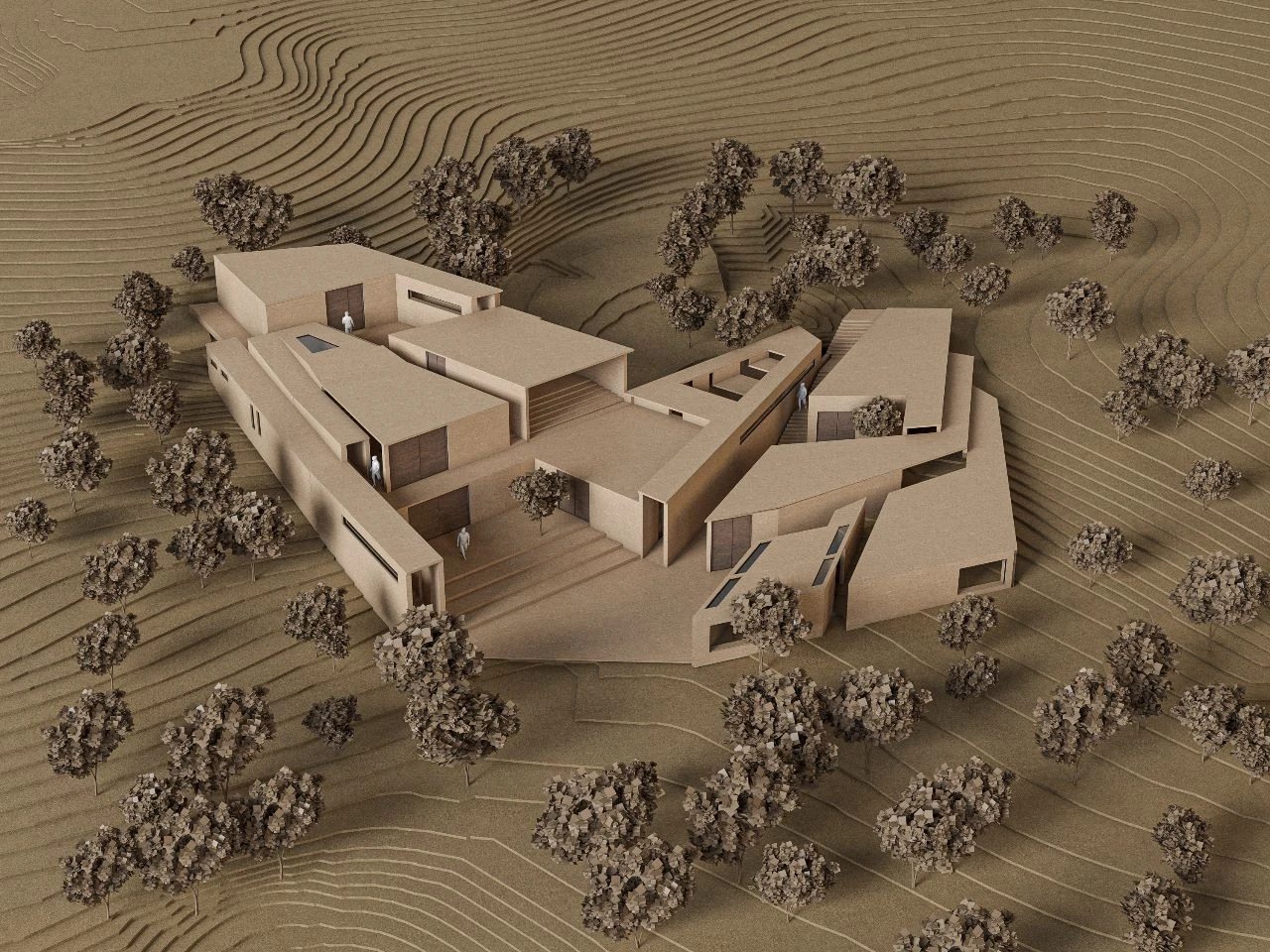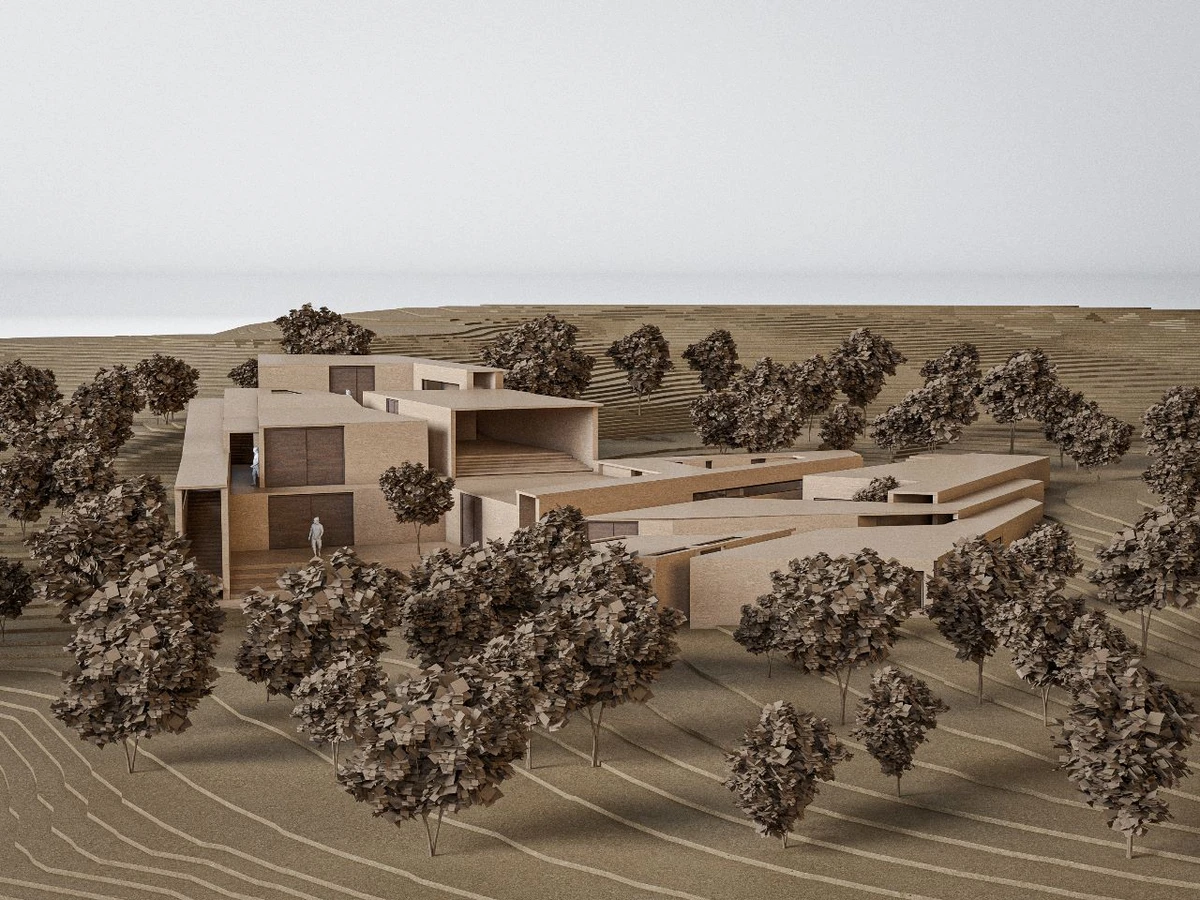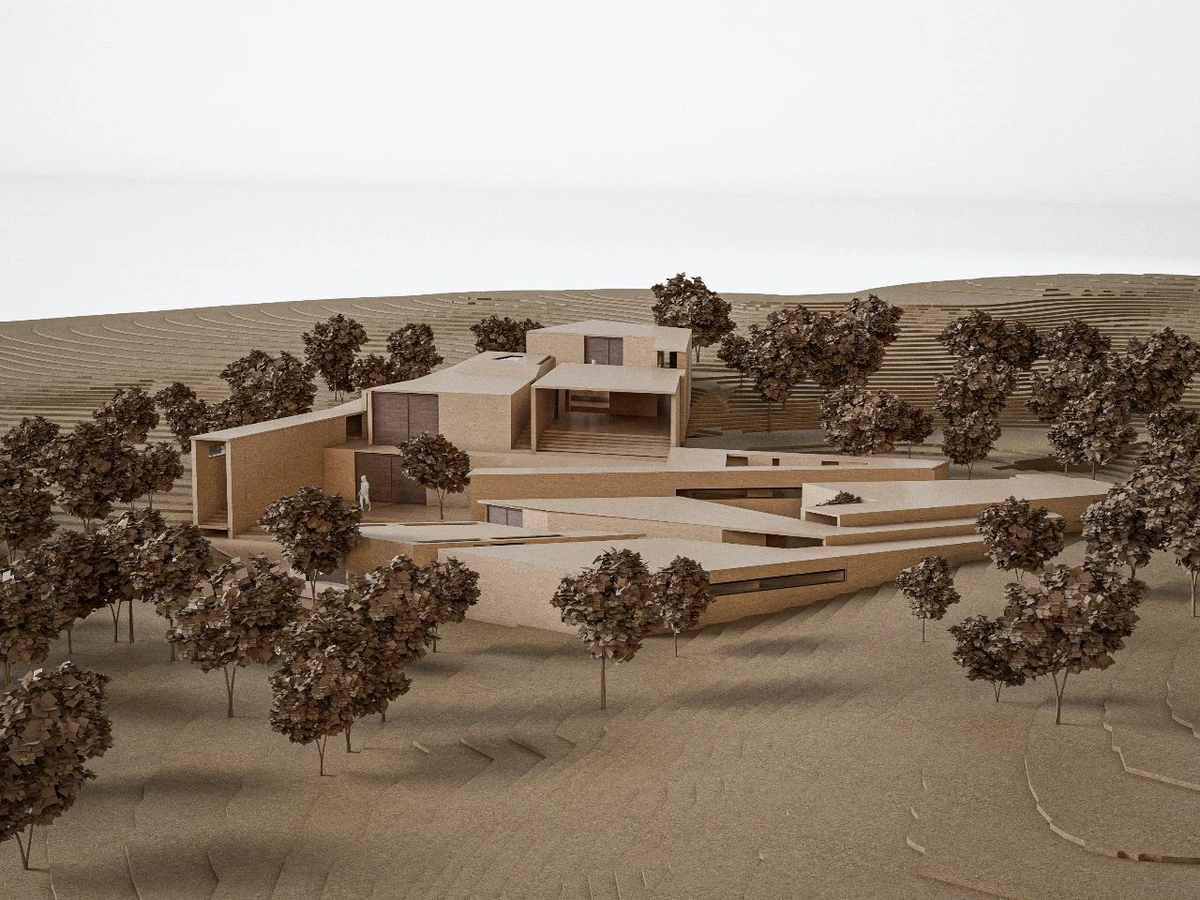

— Tarifa, Spain
Khemet
Architecture for Belonging.
Located in Tarifa — the closest point between Africa and Europe — this community center emerges as a civic landscape dedicated to cultural integration, social cohesion, and collective empowerment. Conceived in response to the growing challenges surrounding migration and displacement in southern Spain, the project reimagines architecture as a platform for connection, dignity, and belonging.
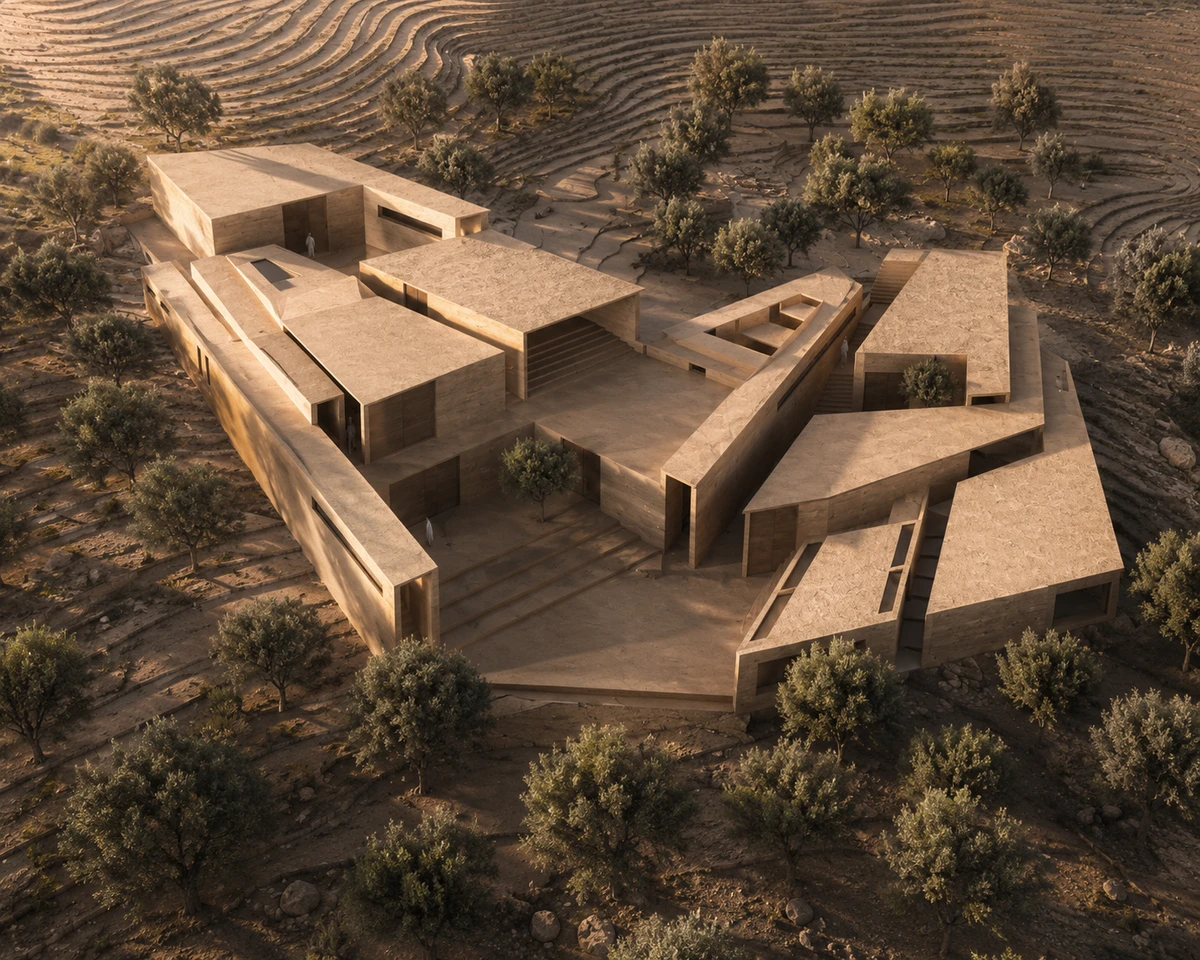
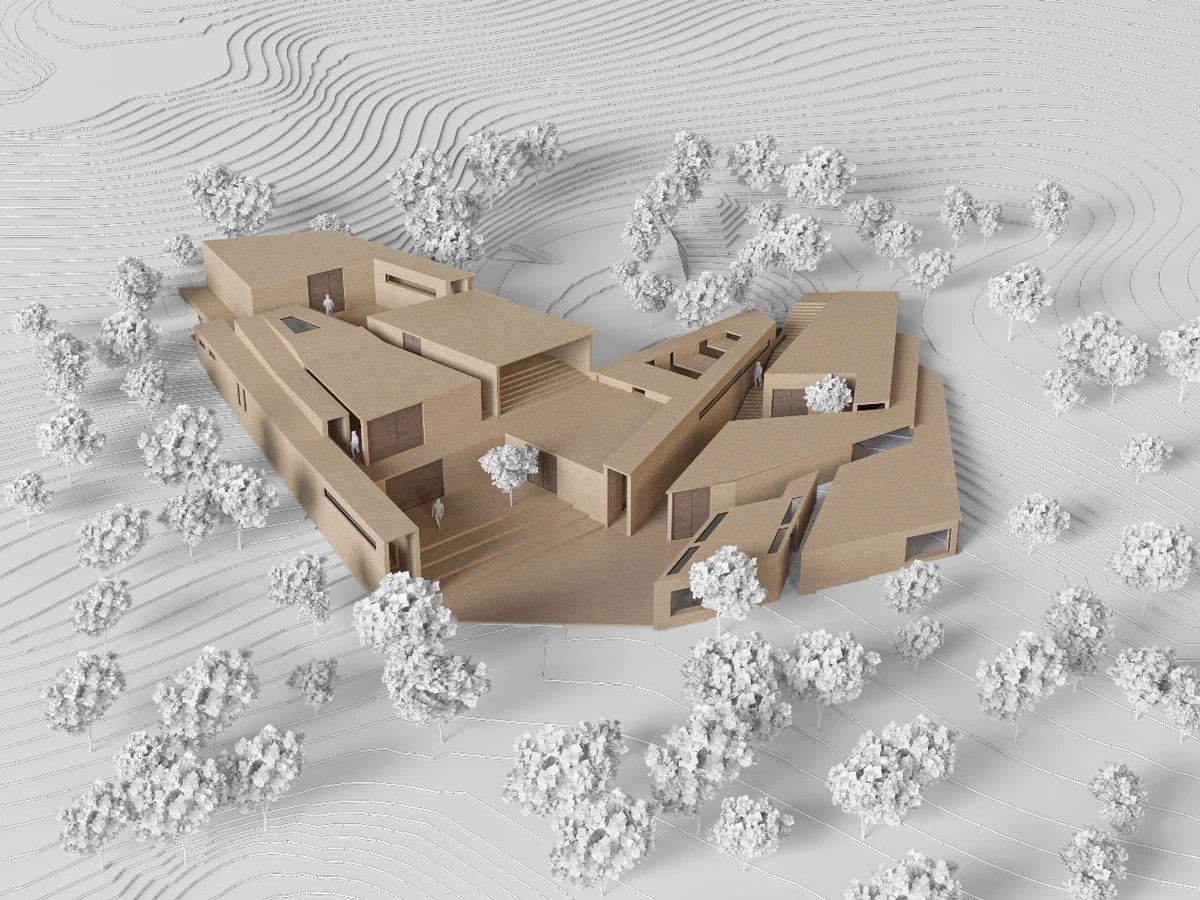
Inspired by the monumental spatial language of the Mortuary Temple of Hatshepsut and rooted in principles of earth architecture, the proposal is conceived as an extension of the terrain itself: a series of carved volumes, terraces, courtyards, and processional spaces embedded within the landscape. The architecture draws from African and Arab spatial traditions while translating them into a contemporary civic language defined by silence, shadow, materiality, and permanence.
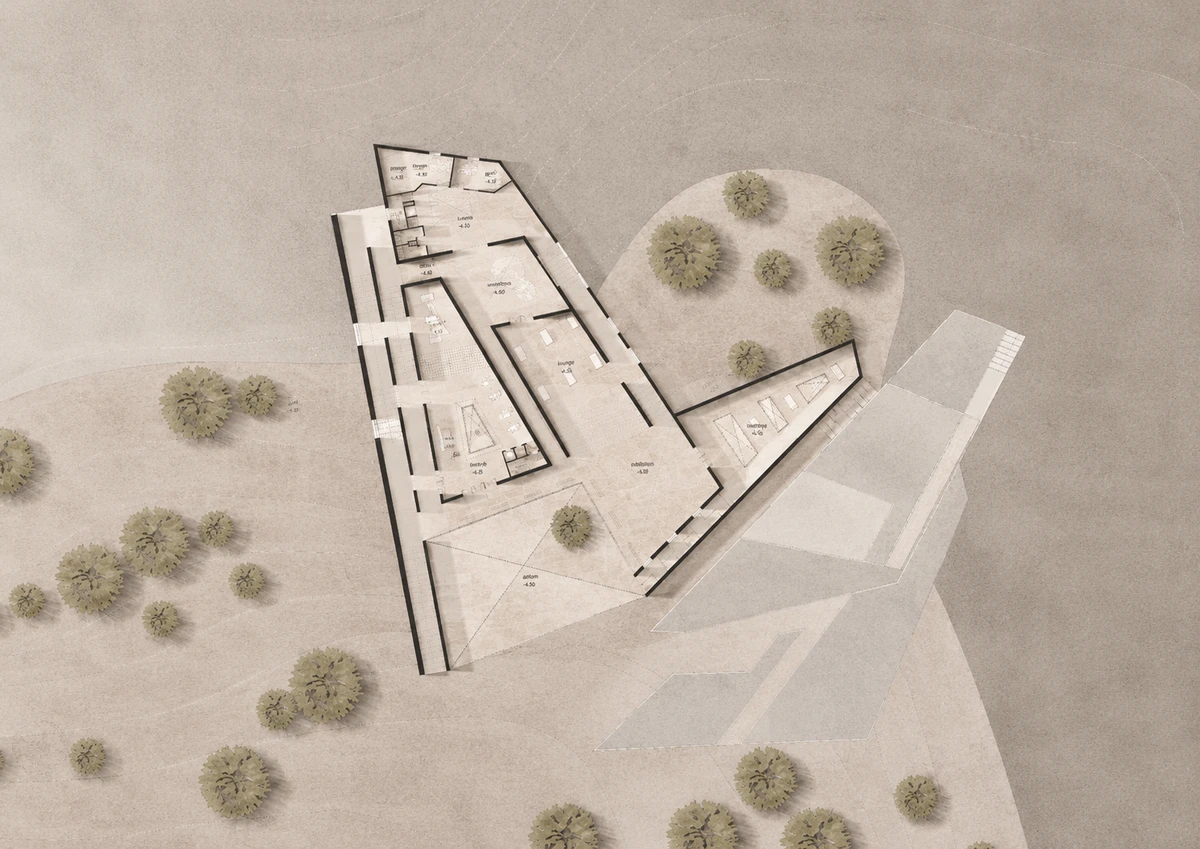
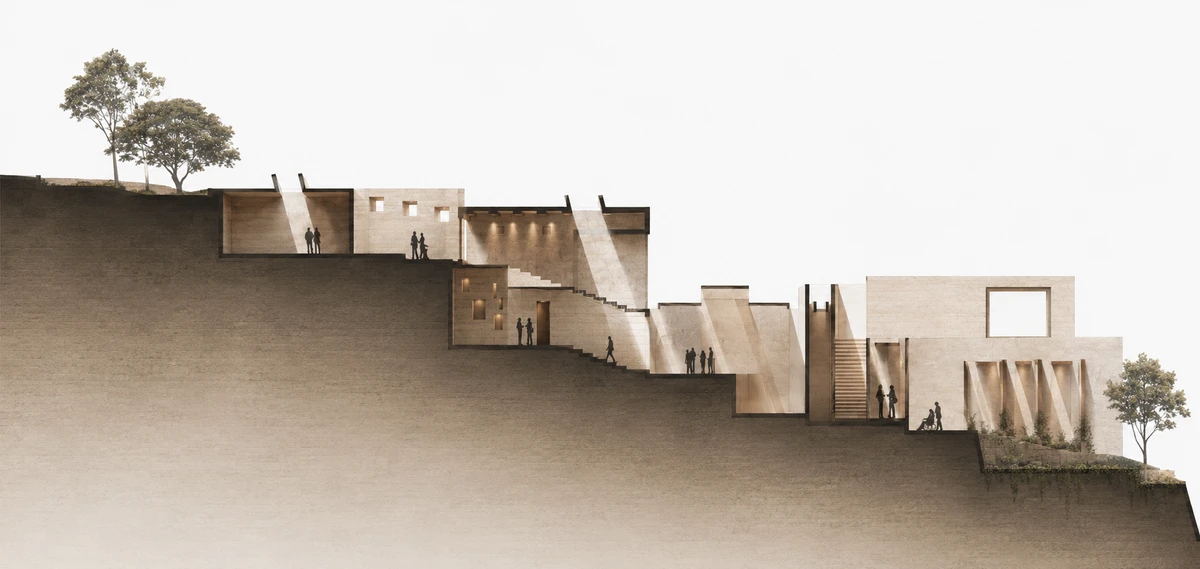
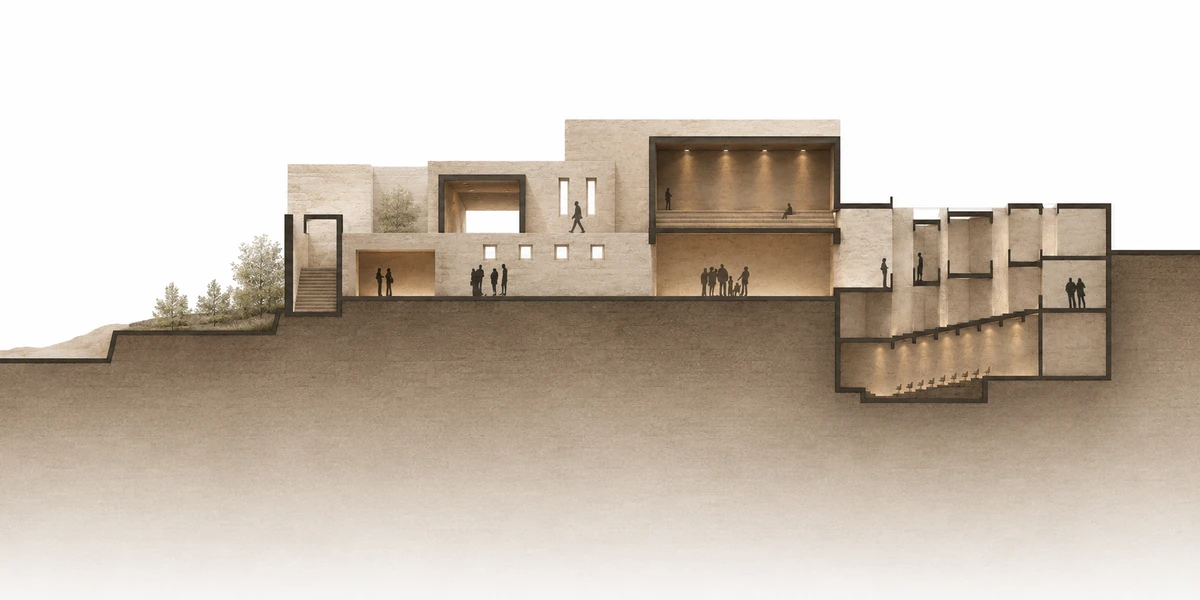
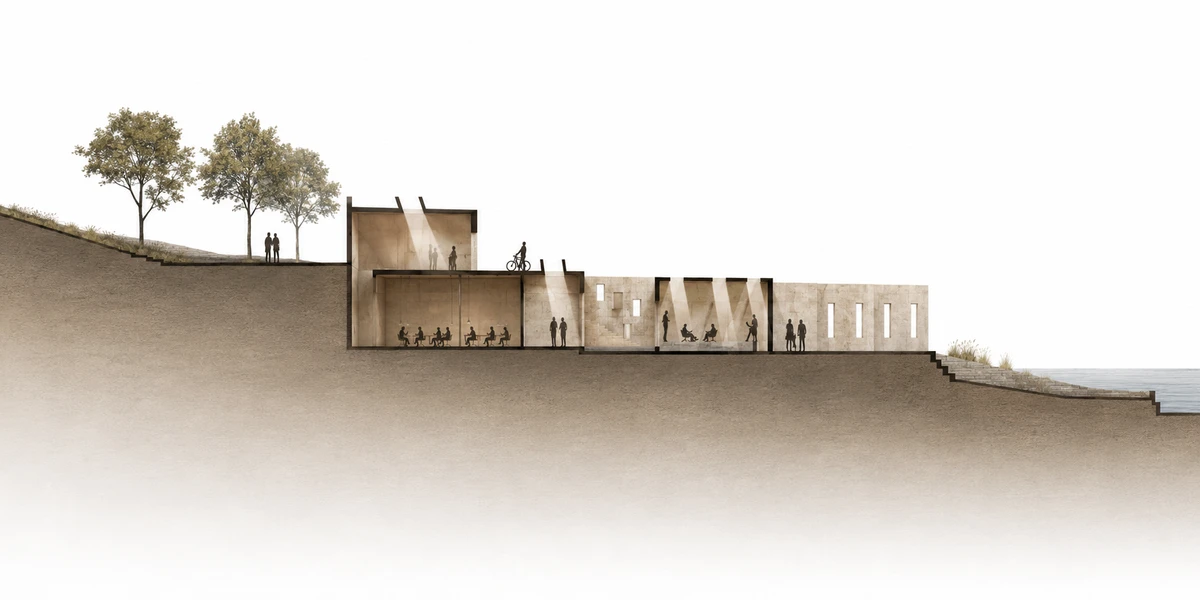
More than a building, the center functions as an inclusive social infrastructure designed to support immigrants, refugees, and vulnerable communities through education, vocational training, healthcare, cultural exchange, and community services. Dedicated spaces for workshops, learning, recreation, and collective gathering encourage interaction across generations and cultures, fostering both social inclusion and economic opportunity.
The project prioritizes young people, women, children, and the elderly, creating environments that promote empowerment, accessibility, and shared identity. Through a restrained palette of earth-toned materials, filtered light, and carefully choreographed movement through the site, the architecture seeks to evoke a sense of refuge and continuity — a place where landscape, memory, and community converge.
Conceived as a contemporary sanctuary for collective life, the project stands as both a social response and an architectural statement: one that celebrates diversity, strengthens human connection, and transforms the boundary between continents into a space of encounter and coexistence.